
“Mushrooms are miniature pharmaceutical factories, and of the thousands of mushroom species in nature, our ancestors and modern scientists have identified several dozen that have a unique combination of talents that improve our health” – Paul Stamets
Out of all phenomena present in the natural world, nothing fascinates me more than Fungi. When I’m taking a walk in the nearby forest, especially during a cooler rainy season, I gaze and wonder in awe at the variety of alien-looking contraptions that seem to magically sprout out of the dirt, the bark, or the trunk of a tree. They come in all different shapes and sizes, and it equally fascinates me as much as it terrifies me to think that any mushroom you encounter could either be medicinal or deadly.
The kingdom of Fungi represents a wide variety of organisms (approximately 1.5 million of them) that typically use dead organic materials as a source of food. Fungi can be both unicellular and multicellular and are comprised of filaments called Hyphae. Hyphae then form a webbed networked referred to as mycelium and this is where the fruiting body of mushrooms sprouts from (Pennsylvania State University, n.d). Fungi have dramatic implications in our entire ecosystem, playing vital roles in sustaining diversity and health of natural environments by using their plant cell wall degrading enzymes to break down dead plant material, providing an energy source for vegetation (Lange, 2010).
Culinary mushrooms and medicinal mushrooms are essentially the two classes of Fungi that humans consume. Even though some medicinal mushrooms can be consumed whole, similarly to edible mushrooms, medicinal mushrooms tend to be prized for their therapeutic constituents which are extracted and conveniently formulated in tinctures or capsules. Let’s examine the benefits of both edible and medicinal mushrooms.
Nutritional content of culinary mushrooms
Mushrooms are typically comprised of 90% water and 10% dry matter but also contain a wide spectrum of micronutrients. I will go into much greater detail on another article as to how important micronutrients are and their extensive functions in our physiology. Mushrooms have contain vitamins B1 (thiamine), B2 (riboflavin), B3 (niacin), B12 (cobalamin), C, D, E, as well as phosphorus, iron, copper, zinc, manganese and ergosterol (Assemie & Abaya, 2022). Due to their digestibility, mushrooms can also serve as a source of protein, which attributes to between 15-35% of dry weight, varying on species of mushrooms. Mushrooms tend to be relatively rich in the amino acids, such as threonine, valine, glutamic acid, aspartic acid, and arginine but poor in methionine, cysteine, tryptophan, lysine, leucine, isoleucine and tryptophan. This implies that mushrooms should not be considered a whole source of protein in comparison to other sources of protein but remain a nutritional source as a part of a diverse diet (Cheung, 2010).
Most of the carbohydrates in mushrooms are referred to as non-digestible carbohydrates, such as oligosaccharides and non-starch polysaccharides including, chitin, 
Therapeutic value of medicinal mushrooms
Mushrooms with therapeutic or medicinal value have a broad range of constituents that have been shown to exert antioxidant, anti-inflammatory, antibacterial, neuroprotective, immune-enhancing, and anti-mutagenic effects, making them promising in prophylactic treatments, managing complex conditions and improving overall health. Let’s discuss the therapeutic benefits of mushrooms that are most used in commercial preparations of medicinal fungi.
Lion’s mane (Hericium erinaceus)

Lion’s mane produces a wide range of metabolites, approximately 70 of them, that have therapeutic benefits across many conditions. The main compounds that have been extracted from Lion’s mane mushrooms are Hericerins, Erinacines, polysaccharides, and sterols. Erinacines have been shown possess anti-MRSA (methicillin-resistant Staphylococcus aureus) and Helicobacter pylori activity, as well as protection against Salmonella infection by stimulating innate macrophage immune cells. On top of its antimicrobial benefits, components extracted from lion’s mane have shown to have anti-cancer effects by enhancing apoptosis (cell death) and mitigating proliferation of certain types of cancer cells (liver, blood, breast, gastric, and colon) (Friedman, 2015).
Commercial preparations of Lion’s mane mushroom seem to emphasize it’s ‘neuro-protective’ benefits, hailing Lion’s mane mushroom as a nootropic of sorts. Erinacines have been shown to have neuro-benefits through several mechanisms;
- Stimulating the production and release of nerve growth factor.
- Reducing amyloid-
deposition and increase insulin-degrading enzyme (mitigating plaque formation in Alzheimer’s disease).
- Increasing dopamine and serotonin levels in the brain, whilst also increasing brain-derived neurotropic factor and decreasing interleukin-6 and tumour necrosis factor-
.
- Mitigating inflammation in the brain may be an important factor in treating mental health disorders as neuro-inflammation is well known to be implicated in mental health pathology (Li et al, 2018).
Cordyceps (Cordyceps sinensis)

Originating from China and used extensively in traditional Chinese medicine, Cordyceps has a broad range of pharmacological activities due to its plethora of naturally occurring compounds. Clinical trials using Cordyceps have shown;
- immune-stimulatory
- immunomodulatory
- anti-inflammatory
- antioxidant
- antimicrobial
- antitumour
- and anti-fatigue applications, amongst others.
Certain constituents, such as Cordomycin and polysaccharides in Cordyceps regulate immune function by interacting antigen-presenting cells to down-regulate inflammatory cytokine production and regulate Th2/Treg cell activity (cells that mediate inflammation). Additionally, Cordyceps up-regulates certain cytokines (interleukin, IFN-

Another interesting application of Cordyceps is wound healing as it has been shown to greatly stimulate cell proliferation and migration, key processes in would healing, including cell invasion. The anti-cancer effects of Cordyceps can be attributed to the ability of sterols, such as ergosterol and 
Reishi (Ganoderma lucidum)
Widely cultivated in China, Reishi is another medicinal mushroom purported to have immunomodulatory, neuroprotective and anti-tumour effects, as well as prolonging longevity. Broadly speaking, triterpenoids and meroterpenoids (classes of terpenoids) in Reishi have been shown to;
- lower blood pressure and cholesterol
- protect the liver (by increasing antioxidant
enzyme production and up-regulating enzymes that process alcohols)
- inhibit tumour cells (in gastric, leukemia, lung, cervical, and liver cells), as well as exert antibacterial and cytotoxic (terminates cells) effects (Ahmad et al, 2021).
Reishi’s immunomodulatory effects can be attributed to its action on activating immune cells, such as B and T lymphocytes, dendritic cells, macrophages and natural killer cells. Reishi’s anti-cancer activities are attributed to its effect on increasing T lymphocytes (CD3, CD4, CD8, CD56), natural killer cells, as well as reducing the inflammatory mediators, IL-6, IL-2 and IFN-
Turkey tail (Trametes versicolor)
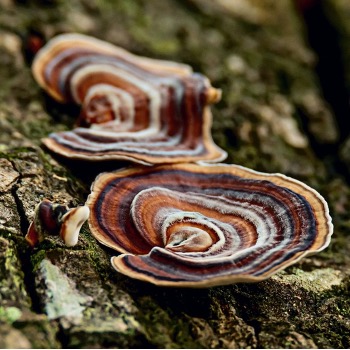
In medicine, Turkey tail mushroom is prized for a unique polysaccharide called polysaccharopeptide (PSP). PSP has potent immunomodulatory effects by stimulating multiple areas of the immune system. Some of these mechanisms include;
- enhancing natural killer cell activity,
- promoting antibody formation T/B lymphocyte formation and macrophages,
- and activating the complement system (immune enhancing of antibodies and phagocytic cells’ ability to clear microbes and damaged cells).

These immunomodulatory effects, as well as certain anti-cancer effects, show promise as an adjunct therapy for treating cancer. Polysaccharides in Turkey tail have shown direct toxicity in a wide variety of cancer cells, including, colon, breast, lung, skin, and gastric, amongst others. Anti-cancer mechanisms behind Turkey tail polysaccharides include;
- Inhibiting cell proliferation (disrupting cell cycle progression)
- Inducing apoptosis (suppressing genes and proteins associates with cancer cell survival)
- Inducing intracellular reactive oxygen species in cancer cells (causing oxidative stress)
- Enhancing anti-tumour effects of antibodies via antibody-dependent macrophage-mediated cytotoxicity (Habtemariam, 2020)
Shiitake (Lentinula edodes)
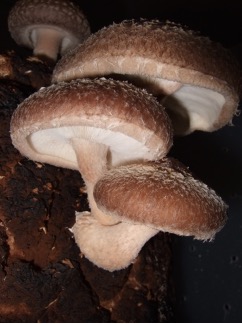
Shiitake mushrooms are unique in the sense that they bear a similar appearance to commonly cooked button mushrooms but are also used in medicinal extracts. As previously mentioned, certain compounds in mushrooms, like polysaccharides, have therapeutic effects in humans and the ones found in Shiitake mushrooms act almost identically to other compounds found in other medicinal mushrooms. Lentinan, the 
- Simulation of macrophages and lymphocytes, resulting in increased production of inflammatory mediators, such as interleukin, tumour necrosis factor-
, and interferon-
- Activating endogenous production of antioxidants, whilst also containing antioxidants, such as phenols (Finimundy et al, 2014)
- Enhancing activity of both innate and adaptive immune cells, including monocytes, neutrophils, natural killer cells and dendritic cells
- Increasing expression of tumour-infiltration T cells, resulting in decrease tumour growth
- Increasing nitric oxide production in macrophages (regulating functional activity of immune cells, whilst increasing defence against pathogens) (Roszczyk et al, 2022).
- Increasing levels of salivary secretory Immunoglobulin A (antibodies that aid in the destruction of pathogens), which indicates increased mucosal immunity (Dai et al, 2015)

Chaga (Inonotus obliquus)

Chaga is no ordinary mushroom because it is acts as a parasite, decomposing tree trunks and once again, polysaccharides represent the largest group of bioactive compounds in Chaga mushrooms, besides phenols. Despite looking quite bizarre for a mushroom, nothing takes away from that fact that its compounds, such as inotodiol and ergosterol, are potent and have a broad range of benefits, including;
- Antimicrobial
- Increasing proliferation of lymphocytes and splenocytes (white blood cells and immune cells, such as macrophages and dendritic cells)
- Antiparasitic
- The same antimicrobial and antioxidant effects of chaga have been shown to improve health outcomes in mice infected with Toxoplasmosis (up-regulating antioxidant enzymes and decreasing inflammatory cytokines)
- Neuroprotective
- Through the same mechanisms behind its antioxidant effects, mitigating inflammation associated with neurodegenerative diseases, such as Alzheimer’s and Parkinsons’s
- Anti-inflammatory/antioxidant
- Increasing the expression of antioxidant enzymes, such as superoxide dismutase (SOD), catalase, and glutathione peroxidase
- Reducing the amount of reactive oxygen species (chemicals that drive inflammation) in normal cells
- Suppressing Th2/Th17 immune response (involved in autoimmune inflammation) (Szychowski et al, 2021)
- Anti-cancer
- Inducing apoptosis and arresting tumour cell cycle, resulting in decreased tumour growth
- Inhibiting metastasis and invasive ability of tumour cells by interfering with expression of enzymes necessary for cells to proliferate and form tissues
- Anti-diabetic
- Polysaccharides can reduce postprandial blood glucose levels (by delaying glucose absorption), improve serum insulin levels and restore function to damaged pancreatic
-cells (Duru et al, 2019)
- Polysaccharides can reduce postprandial blood glucose levels (by delaying glucose absorption), improve serum insulin levels and restore function to damaged pancreatic
As you can now see, and were hopefully not overwhelmed, mushrooms have priceless benefits for humans. Starting from their nutritional content all the way to their medicinal value, mushrooms can be integral part of anyone’s diet or home apothecary so always have some in your fridge and a tincture in your pantry from when you are in need for a pick-me-up.
References
Ahmad, R., Riaz, M., Khan, A., Aljamea, A., et al. (2021). Ganoderma lucidum (Reishi) an edible mushroom; a comprehensive and critical review of its nutritional, cosmeceutical, mycochemical, pharmacological, clinical, and toxicological properties. Phytotherapy research, 35(11), 6030-6062. https://doi.org/10.1002/ptr.7215
Assemie, A. & Abaya, G. (2022). The effect of edible mushroom on health and their biochemistry. International journal of microbiology, 2022. https://doi.org/10.1155/2022/8744788
Chen, P.X., Wang, S., Nie, S. & Marcone, M. (2013). Properties of Cordyceps sinensis: a review. Journal of functional foods, 5(2), 550-569. https://doi.org/10.1016%2Fj.jff.2013.01.034
Cheung, P.C.K. (2010). The nutritional and health benefits of mushrooms. Nutrition bulletin, 35(4), 292-299. https://doi.org/10.1111/j.1467-3010.2010.01859.x
Dai, X., Stanilka, J.M., Rowe, C.A., Esteves, E.A., et al. (2015). Consuming Lentinula edodes (Shiitake) mushrooms daily improves human immunity: A randomized dietary intervention in healthy young adults. Journal of the American college of nutrition, 34(6), 478-487. https://doi.org/10.1080/07315724.2014.950391
Das, G., Shin, H.S., Leyva-Gomez, G., Prado-Audelo, M.L., et al. (2021). Cordyceps spp: a review on its immune-stimulatory and other biological potentials. Frontiers in pharmacology, 11, 602364. https://doi.org/10.3389/fphar.2020.602364
Drozdowski, L.A., Reimer, R.A., Temelli, F., Bell, R.C., et al. (2010). β-Glucan extracts inhibit the in vitro intestinal uptake of long-chain fatty acids and cholesterol and down-regulate genes involved in lipogenesis and lipid transport in rats. Journal of nutritional biochemistry, 21(8), 695-701.https://doi.org/10.1016%2Fj.jnutbio.2009.04.003
Duru, K.C., Kovaleva, E.G., Danilova, I.G., van der Bijl, P. (2019). The pharmacological potential and possible molecular mechanisms of action of Inonotus obliquus from preclinical studies. Phytotherapy research, 33(8), 1966-1980. https://doi.org/10.1002/ptr.6384
Elkhateeb, W.A., Elnahas, M.O., Thomas, P.W. & Daba, G.M. (2020). Trametes versicolor and Dictyophora indusiate champions of medicinal mushrooms. Journal of pharmaceutical research, 4(1). https://doi.org/10.23880/oajpr-16000192
Finimundy, T.C., Dillon, A.P, Henriques, J.P. and Ely, M.R. (2014). A review on general nutritional compounds and pharmacological properties of the Lentinula edodes mushroom. Food and nutrition sciences, 5(12), 1095-1105. http://dx.doi.org/10.4236/fns.2014.512119
Friedman, M. (2015). Chemistry, nutrition, and health-promoting properties of Hericium erinaceus (Lion’s Mane) mushroom fruiting bodies and mycelia and their bioactive compounds. Journal of agricultural and food chemistry, 63(32), 7108-7123. https://doi.org/10.1021/acs.jafc.5b02914
Habtemariam, S. (2020). Trametes versicolor (Synn. Coriolus versicolor) polysaccharides in cancer therapy: targets and efficacy. Biomedicines, 8(5), 135. https://doi.org/10.3390/biomedicines8050135
Lange, L. (2010). The importance of fungi for a more sustainable future on our planet. Fungal biology review, 24(3-4), 90-92. https://doi.org/10.1016/j.fbr.2010.12.002
Li, I., Lee, L., Tzeng, T., Chen, W., et al. (2018). Neurohealth properties of Hericium erinaceus mycelia enriched with Erinacines. Behavioural Neurology, 2018. https://doi.org/10.1155/2018/5802634
Pennsylvania State University. (n.d). 5.3 – Fungi. https://psu.pb.unizin.org/microb201/chapter/fungi/
Roszczyk, A., Turło, J., Zagożdżon, R. & Kaleta, B. (2022) Immunomodulatory properties of polysaccharides from Lentinula edodes. International journal of molecular sciences. 23(16), 8980. https://doi.org/10.3390/ijms23168980
Szychowski, K.A., Skóra, B., Pomianek, T. & Gmiński, J. (2021). Inonotus obliquus – from folk medicine to clinical use. Journal of traditional and complementary medicine, 11(4), 293-302. https://doi.org/10.1016%2Fj.jtcme.2020.08.003
Villares, A., Mateo-Vivaracho, L. & Guillamon, E. (2012). Structural features and healthy properties of polysaccharides occurring in mushrooms. Agriculture, 2(4), 452-471. https://doi.org/10.3390/agriculture2040452
Wang, L., Li, J., Zhang, J., Li, Z., et al. (2020). Traditional uses, chemical components and pharmacological activities of the genus Ganoderma P. Karst.: a review. RSC advances, 10(69), 42084-42097. https://doi.org/10.1039/D0RA07219B
Zhang, JJ., Li, Y., Zhou, T., Xu, DP., et al. Bioactivities and health benefits of mushrooms mainly from China. Molecules, 21(7), 938. https://doi.org/10.3390%2Fmolecules21070938
 Nutrition apothecary
Leave a comment