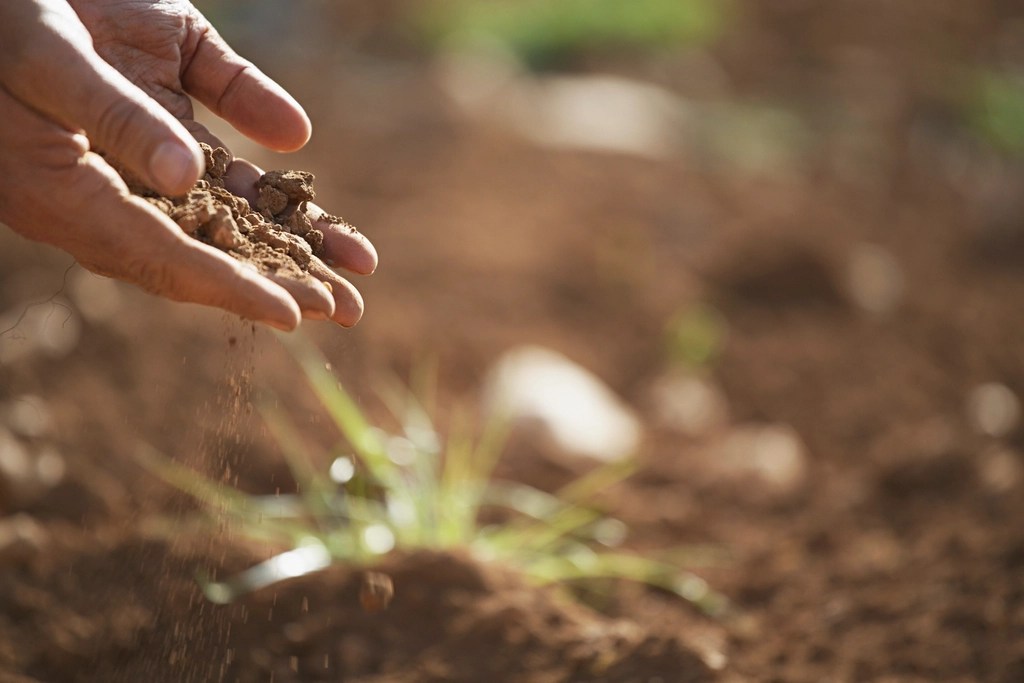
We’ve spent countless millennia in close contact with this essential component of the earth, we’ve ran on, danced, fought, hunted on, foraged, bonded, slept on, and used this resource to yield food. In pre-industrial times, we took every single step, barefoot or not, on it, making it an integral part of life on land. So, what exactly is it? What I’m referring to is soil, the brown, mushy stuff that most of us associate with ‘dirt’ or the thing that plants need to grow, but it’s uses and functions within earth’s ecosystem are far more diverse. Since I am a proponent of all things health, particularly “natural” health in a holistic setting, and the soil is such an intrinsic part of our lives, I thought I would highlight the gravity of an issue that is not given enough attention, an invisible tragedy of sorts that could have grave consequences for us in the future if we do not resolve the mishandling of this precious resource, broadly referred to as soil degradation, but first, it’s important to grasp what soil is and how critical it is for sustaining life on earth.
Earth is a recycling machine, every living organism that exists, even the ones we can’t see with our bare eyes, participate in this eternal cycle of life, death, and regeneration. Soil is primarily formed from the weathering of rocks, but its composition also includes a diverse array of microbes, mineral particles, organic materials, air, and water. Soils develop over time and form layers, otherwise referred to as horizons, that vary in structure. The top layer is rich in humus (dark organic matter comprised of decomposed plant and animal material) and highest in biological activity, whereas the lower layers are rich in clay, moisture and weathered rock (Queensland government, 2013). Besides clay, sands and silts (earthy matter deposited as sediment) also contribute to the composition of soil, which are composed of minerals such as quartz and feldspars, and trace amounts of many other minerals, such as calcium, phosphorus and potassium, which add valuable nutrition to the soil. Hence, most soils are referred to as mineral soils because their make-up is primarily comprised of minerals (Forestry-learning, 2013).

Given the complexity of soil’s composition, every one of its component interplays to sustain the fertility of the soil, and abnormal deviations in any one of these components can cause deleterious effects on a soil’s viability. For example, despite only comprising a small percentage of a soil’s composition, the microorganisms present in soil have diverse interactions with plants and can be parasitic or commensal, spanning all ecological possibilities, including mutualistic, competitive and neutral. Microbes can boost plant growth through three primary mechanisms:
- Influencing hormone signalling of plants
- Outcompeting pathogenic organisms
- Improving bioavailability of soil-borne nutrients
Soil microbes can metabolize soil-borne nutrients and liberate their elements for plant nutrition because elements, such as nitrogen, phosphorus and sulphur tend to be bound to organic molecules, which render them unavailable for nutrient uptake by the plants and microbes can depolymerize and mineralize these elements into inorganic forms, including ammonium, nitrate, phosphate, and sulphate, which are the preferred forms for plants. Instead of using mineral fertilizers on a large scale, which cause alterations of earth’s biogeochemical cycles, consume limited resources of phosphate rock, and contributes to global warming via the energy-intensive process of producing nitrogen fertilizer, soils can be supplemented with root-associated microbes that can process organic-bound nutrients for plant growth but research is limited in this area as it is unclear as to how plants recruit beneficial microbes and which strains are best for processing different minerals (Jacoby et al, 2017).

Another factor pertaining to soil structure that profoundly influences its viability is the pH, or acidity, of the soil. The acidity of soil influences biogeochemical (linkages between biological, chemical, and physical properties) processes that affect plant growth and biomass yield, hence why soil pH is referred to as the “master soil variable”. Soil pH is regulated by;
- The release of cations, such as calcium, magnesium, potassium, and sodium, beyond their leeching from weathered minerals, which leaves hydrogen and aluminium to exchangeable cations
- Dissolution of carbon dioxide in soil water produces carbonic acid, which releases hydrogen ions
- Nitrification of ammonium and nitrate and residues of humus produce carboxyl and phenolic groups that release hydrogen ions
Essentially, soil pH controls the biology of the soil by;
- controlling the mobility and bioavailability of trace elements
- increasing solubility of soil organic matter by increasing separation of acid functional groups and reducing bonds between clays and organic constituents, and thus increasing mineralizable nitrogen and carbon
- Influencing soil respiration (production of carbon dioxide by soil organisms), which affects bioavailability of minerals and higher soil pH (above 7) is correlated with higher carbon and nitrogen content from microbial biomass
- Influencing the production and function of enzymes necessary for the cycling of nutrients
- Improving the biodegradation of xenobiotics, such as atrazine, via its effect on microbial diversity, activity, and their enzymes (Neina, 2019)

The brass tacks is that the majority of the world’s soil resources are either in fair, poor, or very poor condition, varying on geographic location. Population and economic growth and climate change are the primary drivers of soil change and the most significant threats to soil viability in the long-term are erosion, loss of soil organic carbon and nutrient imbalance (Montanarella et al, 2015). Given that approximately 33%, if not more, of the earth’s land surface has been affected by some kind of soil degradation, it is paramount that awareness of this pernicious problem is raised, and solutions are developed. Soil degradation simply refers to a progressive decline in soil quality and there are both natural and anthropogenic (man-made) causes, which include;
- Physical
- Crusting/sealing/compaction
- Runoff/erosion
- Temperature deviations
- Chemical
- Acidification/salinization
- Nutrient depletion/elemental imbalance/leaching
- Contamination/pollution
- Biological
- Biodiversity loss
- Soil-borne pathogens
- Soil organic matter decline
- Greenhouse gas emissions
- Ecological
- Nutrient and carbon loss
- Net biome productivity loss
- Inhibited denaturing of pollutants
- Disruption of the hydrological cycle (movement of water on, above, or below the earth’s surface)
When soil degrades, its soil organic carbon pool depletes and its carbon sink capacity decreases, implying that degraded soils cannot sequester more carbon from the atmosphere than they are releasing, and the negative consequence of this is that soils now become a source of greenhouse gas emissions. Once degradation is set in motion, coupled by land misuse, soil mismanagement, and extractive farming, the process feeds on itself in a never-ending downward spiral.
- Soil structure degradation
2. Soil carbon decline
3. Soil biodiversity decline
4. Accelerated erosion
5. Nutrient, carbon, and water loss from ecosystem
6. Decrease in ecosystem services (Lal, 2015)
1 gram of soil can contain up to 1 billion bacteria, consisting of tens of thousands of taxa, fungal hyphae, mites, nematodes, earthworms and arthropods. A reduction of soil biodiversity has been established to impair numerous ecosystem functions, such as nutrient uptake and cycling of resources between blow-ground and above-ground communities. Diversity of plant species and carbon sequestration (the process of storing carbon in a carbon pool by removing carbon dioxide from the environment) within an ecosystem affected by a reduction in microbial biomass has also been shown to decline.
Additionally, a reduction in soil biodiversity coincides with a decline in nutrient cycling, as microbes are essential for the breakdown of organic matter and recycling of liberated resources back into the above-ground community. Loss of phosphorus from leaching after rainfall increased threefold and loss of nitrogen via nitrous oxide emissions increased up to sixfold in soil biodiversity-reduced ecosystems (Wagg et al, 2014).
It is estimated that approximately 75 billion tons of fertile soil are lost from world agricultural systems each year. Approximately 50 % of the earth’s land area is devoted to agriculture, with about one-third planted to crops and two-thirds serving as grazing land, and 20% of it is occupied by forests. Cropland is most vulnerable to erosion (another factor in degradation) because of the constant cultivation (tillage) and removal of the crops, which exposes the soil to the elements, such as wind and rainfall, hence why soil erosion on agricultural land is estimated to be 75 times greater than forest land.
Furthermore, 2 billion hectares of cropland that have been abandoned since farming began and 30% of it has become unproductive, due to erosion, and this has led to a reduction in biodiversity of the plants, animals, and microbes in those areas (Pimentel & Burgess, 2013). Techniques such as mulching, crop rotation, planting nitrogen-fixing trees, drip irrigation, drainage ditches, manure application, and reducing tillage, can be implemented to conserve soil and water and mitigate degradation (Bindraban et al, 2012)
Almost all the nitrogen and up to half of the phosphorus in soil is contained in the organic matter, which exists in the decaying matter closest to the surface and is most vulnerable to erosion. Without soil organic matter, cation exchange is decreased, as well as plant root growth and microbial diversity in the soil. Additionally, when large amounts of inorganic nutrients are added to soils in an attempt to maximize crop yields, plant health (resiliency against pests and disease) and nutritional quality is decreased, however, crops grown organically tend to have lower yields than mass-agricultural crops, due to weed competition and asynchrony between nitrogen mineralization and peak plant needs, therefore a blend of agricultural and organic farming that maximizes crop health whilst sustain yield output should be the focus of future agriculture (Reeve et al, 2016).
A healthy soil sustains the continued capacity to function as a vital, living ecosystem that sustains plants, animals, and humans. Soil-ecosystem services that are vital to humans, include sustainable plant production, water quality control, health advancement and climate change mitigation. Tillage can cause compaction and the use of inorganic fertilizers are not sufficient to restore adequate levels of soil organic matter. Therefore, the use of organic amendments, such as manure and compost, and sequestering carbon in soil (a climate change mitigation tactic) can boost plant resiliency to flood and drought and promote the growth of beneficial microbes.
Additionally, soil influences water quality as soil can be both a sink and source of pollutants, such as herbicides/pesticides, heavy metals, antibiotics, etc. and fertilizer use can lead to eutrophication (overabundance of nutrients) and anoxia of waterways, promoting algae blooms that damage water quality. The boost in beneficial microbes from organic matter use can also increase the biotransformation of pollutants and improve nutritional value of crops (Lehmann et al, 2020). The long-term effects of soil degradation to manipulate or “hack” food production should not be underestimated. The issue of soil degradation highlights the human tendency to think in reductionistic terms that neglect the broad impact of every living organism on the health of our planet. The premise of thinking holistically does not solely apply to human endeavours, evidently, it applies to all endeavours that involve life.
References
Bindraban, P.S., Velde, M., Ye, L., Berg, M., et al. (2012). Assessing the impact of soil degradation on food production. Current opinion in environmental sustainability, 4(5), 478-488. https://doi.org/10.1016/j.cosust.2012.09.015
Forestry-learning. (2013, January). Composition of soils. http://forestry-learning.blogspot.com/2013/01/composition-of-soils.html
Jacoby, R., Peukert, M., Succurro, A., Koprivova, A., et al. (2017). The role of soil microorganisms in plant mineral nutrition-current knowledge and future directions. Frontiers in plant science, 8, 1617. https://doi.org/10.3389%2Ffpls.2017.01617
Lal, R. (2015). Restoring soil quality to mitigate soil degradation. Sustainability, 7(5), 5875-5895. https://doi.org/10.3390/su7055875
Lehmann, J., Bossio, D.A., Kögel-Knabner, I., & Rillig, M.C. (2020). The concept and future prospects of soil health. Nature reviews earth & environment, 1(10), 544-553. https://doi.org/10.1038%2Fs43017-020-0080-8
Montanarella, L., Pennock, D.J., McKenzie, N.J., Badraoui, M., et al. (2016). World’s soils are under threat. SOIL, 2(1), 79-82. https://doi.org/10.5194/soil-2-79-2016
Neina, D. (2019). The role of soil pH in plant nutrition and soil remediation. Applied and environmental soil science, 2019. https://doi.org/10.1155/2019/5794869
Pimentel, D., & Burgess, M. (2013). Soil erosion threatens food production. Agriculture, 3(3), 443-463. https://doi.org/10.3390/agriculture3030443
Queensland government. (2013, October 8). How soils form. https://www.qld.gov.au/environment/land/management/soil/soil-explained/forms
Reeve, J.R., Hoagland, L.A., Villalba, J.J., Carr, P.M., et al. (2016). Chapter six – organic farming, soil health, and food quality: considering possible links. Advances in agronomy, 137, 319-367. https://sciencelookup.org/wp-content/uploads/2021/12/potential-links-soil-health-food-quality.pdf
Wagg, C., Bender, S.F., Widmer, F., & van der Hijden, M.G.A. (2014). Soil biodiversity and soil community composition determine ecosystem multifunctionality. Proceedings of the national academy of sciences, 111(14), 5266-5270. https://doi.org/10.1073%2Fpnas.1320054111
 Nutrition apothecary
Leave a comment